
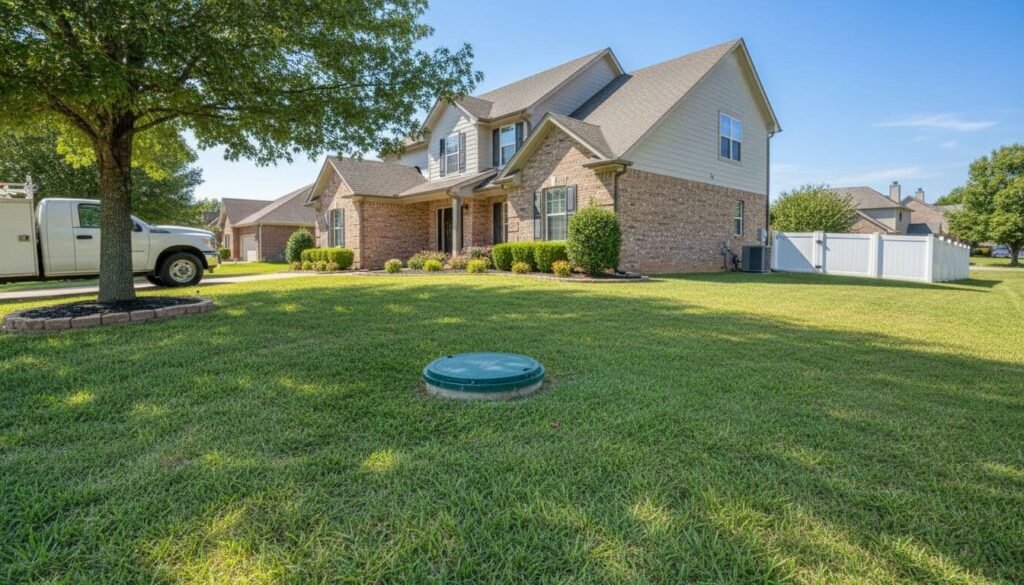
If you own a home on a septic system in Central Arkansas, you live with a hidden risk under your yard. When that tank fills up, life in the house gets messy fast.
Many homeowners search for septic tank pumping Little Rock only after they smell sewage or see toilets start to gurgle. By that point, you are already in the danger zone. A little planning keeps you far away from that kind of stress.
This guide breaks down how often you really need pumping in Little Rock, how to spot trouble early, and what can happen if you ignore it. The goal is simple: protect your home, your yard, and your wallet.
How Your Septic Tank Works, In Simple Terms
Think of your septic tank as a big underground settling bucket.
Wastewater from toilets, sinks, and showers flows into the tank. Inside the tank:
- Solids sink to the bottom and form sludge.
- Grease and fats float to the top and form scum.
- The clearer water in the middle flows out to the drain field.
Bacteria in the tank break down some solids, but not all. The sludge and scum slowly build up. Pumping removes this buildup so it does not reach the outlet pipe and clog the drain field.
If the tank never gets pumped, solids leave the tank, plug the soil, and your system starts to fail.
How Often Should You Schedule Septic Tank Pumping in Little Rock?
The standard rule for a typical home is every 3 to 5 years. In Little Rock, that is a good starting point, but it is not the full story.
Your pumping schedule depends on:
- Tank size
- Number of people in the house
- How much water you use
- How much garbage disposal and laundry use you have
Here is a simple guide:
| Household size | Approx. tank size | Typical pumping interval |
|---|---|---|
| 1–2 people | 1,000 gallons | Every 5–6 years |
| 3–4 people | 1,000 gallons | Every 3–4 years |
| 5+ people | 1,000 gallons | Every 2–3 years |
| 5+ people | 1,250–1,500 gal | Every 3–4 years |
These are general ranges, not strict rules. A home that runs several loads of laundry a day or uses a lot of water will need pumping more often.
For more detailed local guidance, many homeowners review nearby options for Little Rock septic tank pumping services.
Small Family vs. Large Family: A Real-World Example
Picture a retired couple in West Little Rock. They have a 1,000-gallon tank, do a few loads of laundry a week, and rarely have guests. They might safely pump every 5 or even 6 years.
Now picture a family of six in Sherwood. They have teens taking long showers, daily laundry, and heavy kitchen use. With that same 1,000-gallon tank, they may need pumping every 2 to 3 years.
Same size tank, very different schedules. The tank does not care how many bedrooms the house has. It only cares how much wastewater flows into it.
Signs Your Septic Tank Needs Pumping Soon
You do not have to guess all the time. Your septic system will start to send warnings when the tank is getting too full.
Watch for:
- Slow drains in more than one fixture
- Gurgling sounds from toilets after flushing
- Sewage smell near drains, the tank, or the drain field
- Wet or soggy spots over the tank or field in dry weather
- Extra green, lush grass in the drain field area
If you see two or more of these signs, you are likely overdue for pumping. At that point, you are not just paying for a routine visit. You are paying to prevent an emergency.
If you ignore those signs, sewage can back up into tubs, showers, or floor drains. Cleanup costs and property damage can be several times more than regular pumping.
How Little Rock Soils and Rain Affect Your Pumping Schedule
Local conditions in Central Arkansas matter more than most people think.
Much of the Little Rock area has clay or clay-loam soils. These hold water longer and drain slowly. When your drain field soil stays wet, it cannot absorb as much wastewater. That makes it more sensitive to extra solids leaving the tank.
We also get heavy rain at times, plus spring storms. When soils are already soaked, your drain field has less room to handle daily flow. A tank that is too full during a wet spell is more likely to push solids out to the field.
What this means for you:
- Tight clay soils and wet yards call for more careful pumping schedules
- If your yard floods often, plan for the shorter end of the 3 to 5 year range
- After major flooding, a septic inspection is smart
A licensed septic contractor who works in Little Rock, Maumelle, or North Little Rock will know how local soil and water table conditions affect your system.
What Happens If You Put Off Pumping Too Long
Skipping one pumping does not always cause instant failure, but the risk builds over time.
Here is what happens when you wait too long:
- Sludge and scum climb higher in the tank.
- Solids reach the outlet and start to leave the tank.
- The drain field soil plugs and loses its ability to absorb water.
- Sewage begins to surface in the yard or back up into the home.
At that point, pumping alone may not fix the problem. You might need:
- Jetting of the pipes
- Drain field restoration work
- In worst cases, full drain field replacement
Those repairs can cost many times more than a normal pumping schedule over the same years. You also deal with stress, smell, and possible health risks.
What To Expect During a Septic Tank Pumping Visit
Many homeowners feel nervous because they do not know what will happen on pumping day. The process is straightforward.
A typical visit includes:
- The crew locates the tank and uncovers the lids, if not already exposed.
- They check the liquid level and look for signs of backup.
- A vacuum truck removes sludge, scum, and liquid from the tank.
- The tech inspects the baffles, tank walls, and visible components.
- They may rinse the tank interior to break up heavy buildup.
- The crew replaces the lids and covers the access area.
A good technician will also talk with you about your household size, water habits, and a realistic pumping schedule. Ask questions. A few minutes of conversation can save you years of trouble.
Simple Habits That Keep Your Tank Cleaner for Longer
You cannot avoid pumping forever, but you can stretch the time between visits.
Key habits:
- Watch what you flush: Only human waste and toilet paper go down toilets.
- Limit grease: Wipe pans with a paper towel before washing.
- Use the garbage disposal less: Food scraps add to the solid load.
- Spread out laundry: Several loads in one day can flood the system.
- Fix leaks: A running toilet or dripping faucet sends constant water to the tank.
Add one more habit: keep a record. Write down the pumping date, who did the work, and what they found. When you know the last service date, you can plan the next one instead of guessing.
Final Thoughts: Stay Ahead Of Problems, Not Behind Them
A septic system that gets regular care stays quiet in the background, which is exactly what you want. Routine septic tank pumping in Little Rock is cheaper, cleaner, and far less stressful than handling a surprise backup.
If you cannot remember your last pumping date, treat that as a sign to schedule an inspection and likely a pump-out. Ask the technician for a clear, written pumping plan for your home.
A little attention every few years protects your home, your yard, and your peace of mind.