
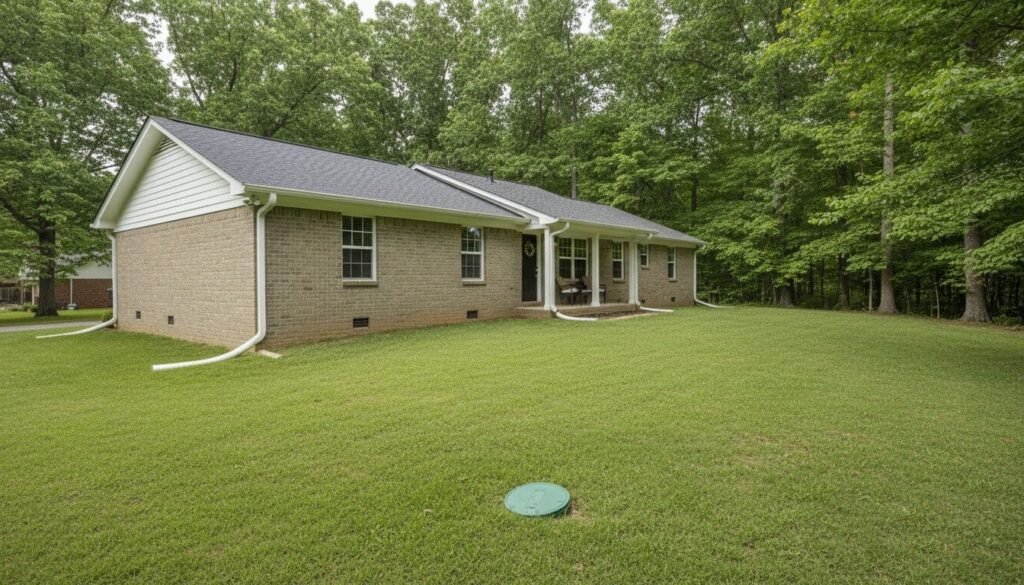
A drain field is supposed to quietly finish the job your septic tank starts. When it’s healthy, effluent leaves the tank, spreads through the trenches, and soaks into the soil for final treatment.
In Little Rock, septic drain field failure often shows up faster because clay soil doesn’t “drink” water the way sandy soil does. Clay holds water, seals up when smeared or compacted, and stays saturated after heavy rains. When the soil can’t accept more effluent, it has only two places to go: back toward your house or up to the surface.
Below are the warning signs I’d want any homeowner in central Arkansas to recognize early, before a small problem becomes a yard-wide mess.
Why Little Rock clay soil pushes drain fields to the edge
Clay soil has tiny pores. Water moves through it slowly, especially once it’s wet. That matters because a drain field depends on “unsaturated” soil space to accept effluent.
In many Little Rock yards, you get a tough combo:
- Slow percolation in clay, so trenches drain sluggishly.
- A natural biomat layer forms in the trench soil over time. Some biomat is normal, too much becomes a plug.
- Seasonal saturation after storms, which steals the soil’s remaining capacity.
The result feels like trying to pour water into a sponge that’s already full.
Indoor signs that the drain field is struggling
When the field can’t accept effluent, the whole system slows down. Homeowners often notice plumbing changes before they ever step outside.
Drains get slow across the house (not just one fixture)
A single slow sink can be a local clog. When multiple fixtures slow down at once, that’s a system flow problem.
Pay attention if tubs, showers, and toilets all feel “lazy,” especially during laundry days.
Gurgling sounds and bubbling toilets
When wastewater can’t move forward, air gets trapped and burps back through the plumbing. That gurgle is the system complaining.
Sewage smell indoors or near a bathroom drain
Odors can come from a dry trap, but a persistent sewage odor with slow drains is a red flag for a restricted septic system.
Safety note: If you suspect a backup, keep people and pets away from any wastewater. Don’t try to open the tank. Septic gases can be dangerous, and sewage can carry disease. Call a professional.
If you’re dealing with an active backup or overflow, use an emergency service, not guesswork. Emergency septic repair in Little Rock can help stop damage quickly.
Yard signs of septic drain field failure (the ones you can’t ignore)
Most true drain field failures show themselves outside. In clay soil, the surface signs can appear after rain, after guests visit, or after a week of heavy water use.
Soggy ground or standing water over the trenches
A healthy drain field shouldn’t create puddles. If the ground feels soft, spongy, or constantly wet in a specific area, that can be effluent surfacing.
In Little Rock clay, this often looks like “it never dries out,” even when the rest of the yard firms up.
Bright green stripes or unusually fast-growing grass
Extra moisture and nutrients can make grass greener right over the laterals. It can look like someone fertilized in straight lines.
Green grass alone doesn’t prove failure, but green grass plus odors or puddling is a strong signal.
Sewage or “rotten egg” odor near the field
A drain field should not smell like wastewater. Odor usually means effluent is too close to the surface, or the soil is staying saturated.
Mosquitoes and flies hanging around one wet patch
If insects keep finding the same wet spot, don’t assume it’s just poor drainage. Check for septic odors and plumbing symptoms too.
Effluent surfacing (gray water, foam, or dark patches)
This is the clearest sign something’s wrong. It’s also a public health issue.
Do not mow through it, hose it down, or let kids play nearby. Call a septic pro and keep everyone away until it’s evaluated.
If you’re seeing these symptoms, it’s time for Little Rock drain field repair services to inspect what’s happening below grade.
Why problems spike after rain in central Arkansas
Clay soil holds water like a bowl. After heavy storms, the soil around trenches can stay saturated for days. That leaves no room for new effluent.
If your issues show up only during wet stretches, you may have a drain field that’s undersized for the site, impacted by a rising water table, or simply losing capacity with age. This is common in neighborhoods with dense clay and flatter yards where surface water lingers.
Common causes behind drain field failure in clay soil
Most failures trace back to one of these:
- Tank not pumped often enough, letting solids reach the field and clog the trench interface.
- Grease and wipes that don’t break down, adding buildup in the tank and lines.
- Crushed or compacted trenches from vehicles, equipment, or soil settling.
- Roof and yard runoff routed toward the field, keeping the soil saturated.
- Root intrusion near laterals or the distribution box.
- High daily water use, which pushes more effluent than the soil can accept.
Many of these are preventable with routine service and better drainage planning.
What to do today (before you call anyone)
- Cut water use for 24 to 48 hours (pause laundry, long showers, and dishwasher cycles).
- Mark wet areas in the yard so nobody walks or drives over them.
- Check for recent triggers (big rain, guests, a running toilet, new sump discharge).
- Don’t add chemicals marketed as “drain field restorers.” They often cause more harm than good.
- Schedule an inspection so the tank, filter (if present), and distribution box get checked the right way.
For ongoing care, Little Rock septic system inspection services help catch early warning signs before you lose the field.
Cost and impact overview (ranges, not guarantees)
Costs vary by access, soil, permits, and how far the failure has progressed. Clay sites can cost more because drainage corrections and trench work are harder.
| Issue or service | Typical impact | Common range (Little Rock area varies) |
|---|---|---|
| Inspection, troubleshooting visit | Finds the cause and options | $150 to $500 |
| Septic tank pumping | Removes solids to protect the field | $300 to $700 |
| Effluent filter cleaning or replacement | Restores flow protection | $100 to $400 |
| Distribution box repair or replacement | Fixes uneven field loading | $500 to $2,500 |
| Drain field line jetting or spot repair | Helps if lines are clogged | $400 to $2,000 |
| Partial drain field repair | Restores part of the absorption area | $3,000 to $10,000 |
| Full drain field replacement | New field, new layout, permits | $8,000 to $25,000+ |
Permits and system rules matter in Arkansas. The Arkansas Department of Health onsite wastewater FAQs are a good starting point, and the current state requirements are in the ADH onsite wastewater rule.
How a professional confirms septic drain field failure
A real diagnosis is more than looking at puddles. A thorough check usually includes:
- Measuring tank levels and checking baffles, because a flooded tank can mimic a field failure.
- Inspecting the effluent filter and outlet, because a clogged filter can cause backups.
- Checking the distribution box for settling or blockage, because a tilted box overloads one trench.
- Evaluating yard drainage and soil saturation patterns, which matter a lot in clay.
- When needed, using cameras or hydraulic testing to confirm where flow stops.
Once the cause is clear, the fix might be as simple as correcting water flow and pumping the tank, or it could mean a repair or replacement plan.
Preventing a repeat in Little Rock clay soil
Most systems need pumping every 3 to 5 years, but it varies with household size, tank size, and water use. Inspections are often smart every 1 to 3 years, and sooner if you have clay soil or a history of wet-yard issues.
A few habits protect the field fast:
- Keep gutters and surface runoff away from the drain field.
- Don’t park or place heavy loads over the trenches.
- Fix running toilets and dripping faucets quickly.
- Send only wastewater and toilet paper into the system.
Clay soil isn’t forgiving, but good maintenance buys time.
Follow The Warning Signs
If you’re seeing wet stripes, odors, or whole-house slow drains, treat it as septic drain field failure until proven otherwise. In Little Rock clay soil, waiting rarely improves anything; it just spreads the damage.
The safest move is to cut water use, keep everyone away from any wastewater, and schedule a professional inspection and pumping plan. Your drain field can’t work if the soil stays saturated, and the sooner you act, the more options you’ll have.